


Nation Reflects on the Life and Legacy of Jesse Jackson

Black Insider Newsroom, February 17, 2026.
The country is grieving the death of Reverend Jesse Louis Jackson Sr. who was among the most influential civil rights leaders in the contemporary world. Jackson passed away when he was 84 years old and his legacy established the modern American politics, increased the power of Black politics, and raised the voice of global justice and equality.
Since he was walking with Martin Luther King Jr. in the peak of the Civil Rights Movement and conducted historic campaigns, which transformed coalition politics, the life of Jackson was filled with activism, faith, and fearless social cause advocacy.
Jackson was born in the city of Greenville, South Carolina, but he originated on the humble beginnings to emerge as a champion of the civil rights movements in the post-1960s era.
He was a young minister who was close to the frontlines of some of the most defining moments of the movement since he was a close associate of Dr. King. Following the assassination of King in 1968, the question was on who would assume the national leadership of the Blacks. Jackson responded to that call not through imitation but through evolution creating new structures of power in an age where political and economic tact was no less important than protest.
He also established Operation PUSH in 1971 that grew to become Rainbow PUSH Coalition that focuses on economic empowerment, corporate responsibility, access to education and political inclusion. Under PUSH, Jackson coerced corporations to employ and employ Black executives, invest in minority communities, and board diversification. He transformed moral protest into quantifiable policy requirements that institutions could no longer avoid dealing with inequity on a social as well as a financial front.
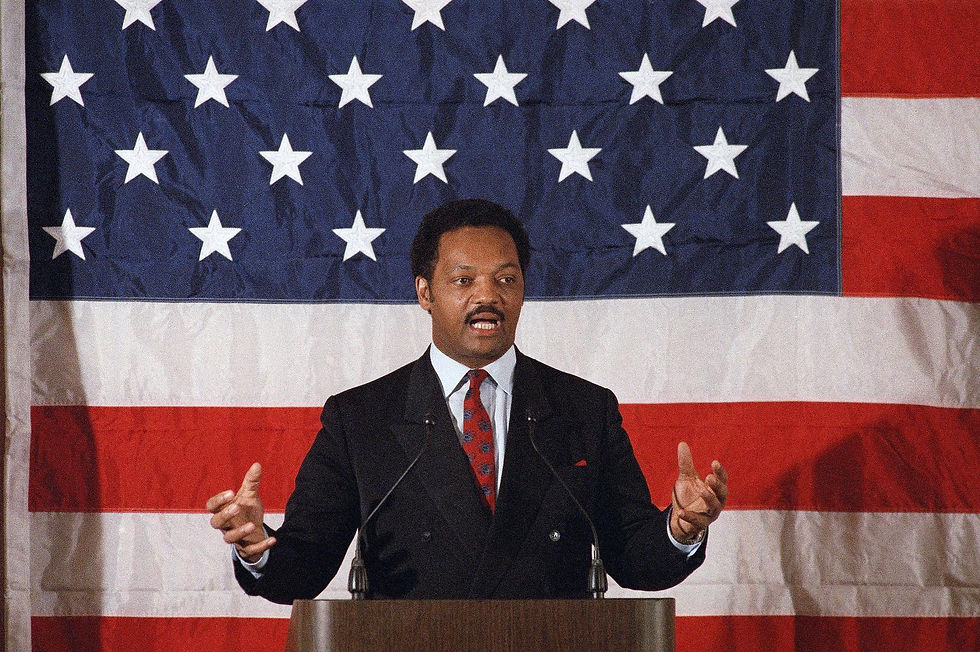
The 1984 and 1988 presidential campaigns by Jackson were historic campaigns in American politics. He did not get the Democratic nomination but his campaigns were revolutionary. He brought together Black voters, Latinos, working-class whites, farmers, labor unions and progressive activists to form what he referred to as the Rainbow Coalition. He also won a number of primaries and caucuses in 1988, and that demonstrated to the country that a candidate of color could run on the national level and achieve great heights. His campaigns increased voter turnout, changed the platform of the Democratic Party, and laid the groundwork that many can say led to similar Black political leadership in the future.
During his tenure, Jackson was a world human rights campaigner, negotiator on behalf of hostages in other nations, a critic of apartheid in South Africa, and a champion of disenfranchised humanities throughout the world. His voice was the rhythm of the Black church and the immediacy of an old-time organizer. He combined bible with planning, prayer with politics and protest with bargaining.
His son, Congressman Jonathan Jackson, told that his father died a natural death with his family around him, and his last few hours were very personal with his parents. Political figures of both ends have paid tributes, even the Vice President, Kamala Harris, and the former president, Donald Trump, considering that Jackson played an undeniable role in American civic life.
Jesse Jackson was more than a politician to the black America. He represented possibility. He was the link between the 1960s marches and the 1980s ballot boxes and further. He demonstrated that activism is able to develop without losing its prophetic appeal. He tested the systems and at the same time learned how to work within them. He was after justice and access too.
The nation is left to ponder and one thing is very clear: The legacy of Jesse Jackson could not be limited to one period, one office and one movement. His life was an epitome of perseverance, belief and the relentless quest of equality. Black Insider is a tribute to his contribution not only as history, but as base.


Comments